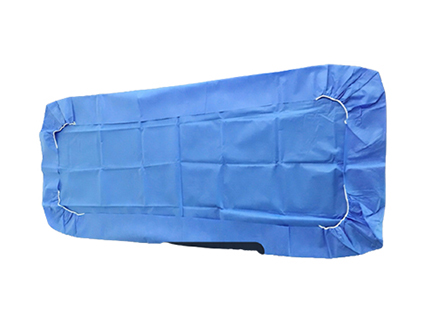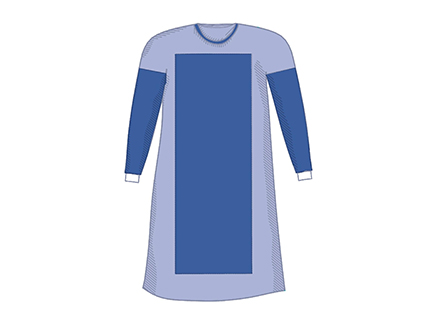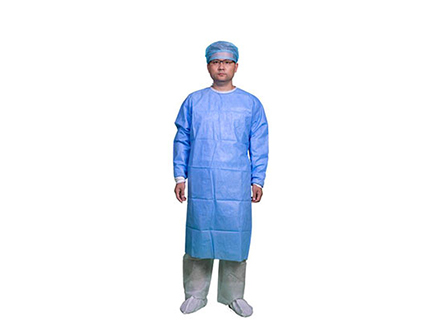

Surgical drapes are critical for maintaining a sterile field and protecting patients and staff from fluid penetration and microbial transfer during surgical procedures. Selecting the right drape involves matching the procedure's fluid risk with the correct protection level (AAMI PB70 Levels 1–4 or EN 13795) and material composition (SMS, Spunlace, or Laminated films).
For high-risk, fluid-heavy operations, utilizing specialized, high-barrier disposable surgical drapes is a recognized clinical best practice to prevent Surgical Site Infections (SSIs).
In 2026, healthcare facilities face stricter compliance metrics regarding hospital-acquired infections (HAIs) and Surgical Site Infections (SSIs). The surgical drape serves as the primary physical barrier between non-sterile areas and the open surgical wound.
While reusable textiles were historically common, modern clinical environments have overwhelmingly shifted to high-performance single-use options due to their consistent barrier integrity. Integrating premium medical textiles with comprehensive body protection PPE gowns forms a secure, multi-layered protective environment for both patient and surgical teams.
The performance of a surgical drape depends entirely on its fabric technology. The material must offer high tensile strength, low linting, fluid resistance, and breathability.
SMS is the gold standard for medical drapes. The outer spunbond layers provide high mechanical and tensile strength, while the middle meltblown layer acts as a microfiber web that traps microbes and blocks fluids.
Spunlace utilizes high-pressure water jets to entangle fibers, creating a textile that feels cloth-like, highly drapeable, and extremely absorbent on the top layer, often backed by a fluid-impermeable film underneath.
For maximum fluid management, heavy-duty drapes utilize multi-layer laminates where a non-woven fabric is bonded to a polyethylene film, ensuring absolute fluid immobilization.
To safely source medical supplies, procurement managers must understand international regulatory standards. In the US, AAMI PB70 classifies drapes into four levels based on liquid barrier performance. In Europe, EN 13795 outlines requirements for standard and high-performance surgical drapes.
Protection Standard | Liquid Barrier Metric | Best-Suited Surgical Application |
AAMI Level 1 | Minimal fluid resistance (Water impact < 4.5g) | Minor, non-invasive outpatient procedures |
AAMI Level 2 | Low fluid barrier (Water impact < 1.0g; Hydrostatic pressure > 20cm) | Minimally invasive surgeries, ophthalmology |
AAMI Level 3 | Moderate barrier (Water impact < 1.0g; Hydrostatic pressure > 50cm) | General surgery, laparoscopy, standard orthopedic procedures |
AAMI Level 4 | Maximum fluid and viral barrier (Passes ASTM F1671 viral penetration test) | High-fluid volume surgeries, cardiovascular, cesarean sections, trauma |
Different anatomical sites require customized structural designs to manage fluids, maintain access, and optimize workspace configuration.
Aperture & Fenestrated Drapes: Featuring pre-cut openings with integrated adhesive borders to securely frame the surgical incision site while sealing off surrounding skin bacteria.
Cardiovascular & Angio Drapes: Extra-large configurations designed for bypass surgeries or catheterizations, often equipped with clear side panels for viewing monitors and dual fenestrations.
Orthopedic Extremity Drapes: Engineered with heavy-duty elastic fenestrations that conform tightly to limbs, accommodating intense manipulation during joint replacements.
Laparoscopy & Lithotomy Drapes: Built-in leggings and fluid collection pouches to manage high irrigation volumes efficiently.
To ensure comprehensive infection control during these diverse procedures, healthcare systems should evaluate custom-tailored medical barrier solutions from a certified disposable surgical drape manufacturer.
Proper aseptic application technique is just as vital as fabric quality. Hospital staff should maintain strict adherence to the following clinical guidelines:
Inspect Packaging: Verify sterilization indicators and packaging integrity before bringing drapes into the sterile field.
Minimize Agitation: Avoid shaking or waving the drape during deployment to prevent airborne particulate generation.
Drape from Clean to Dirty: Place the drape over the incision site first, then extend it outward toward the periphery.
Do Not Readjust: Once a surgical drape is placed, it must not be shifted or moved; if placement is incorrect, discard it and utilize a fresh sterile drape.
To fully protect your staff and facility across all medical tasks, a holistic PPE protocol must look beyond surgical drapes.
For advanced airborne virus and industrial particulate safety, review our comprehensive FFP1, FFP2, and FFP3 respirator EN 149 guide.
For chemical and fluid handling dexterity, explore our detailed comparison on Neoprene vs. Nitrile and Latex medical gloves.
Disposable surgical drapes provide consistent, standardized barrier performance since they are discarded after a single use. Reusable drapes can degrade over multiple laundry cycles, leading to microscopic thinning of the fabric fibers and an increased risk of strike-through fluid contamination.
Strike-through occurs when liquids penetrate through the layers of a surgical drape or gown. When fluid passes through the barrier, it creates a liquid pathway that allows bacteria from non-sterile surfaces to migrate directly into the sterile surgical field, compromising patient safety.
Under AAMI PB70 standards, the entire surgical drape must meet the designated protection level because the entire drape acts as a critical barrier. For surgical gowns, only specific critical zones (such as the front chest and sleeves) are tested and classified under the protection levels.
Most modern high-performance disposable drapes are made from polypropylene (SMS). While technically recyclable as type 5 plastic, medical waste regulations require drapes exposed to bodily fluids to be handled as biohazardous waste, which is typically disposed of via regulated medical incineration or autoclaving.


 English
 日本語
日本語 한국어
한국어 français
 Deutsch
 Español
 русский
 português
 العربية