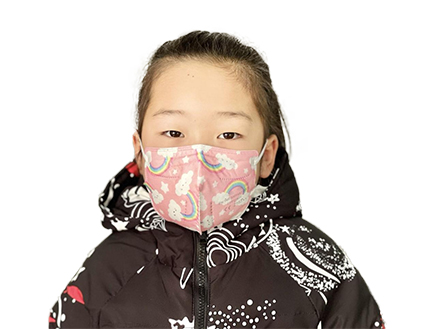

Respirators classified under the European Standard EN 149:2001+A1:2009 are categorized into three protection levels: FFP1 (80% filtration), FFP2 (94% filtration), and FFP3 (99% filtration). Choosing the correct Filtering Facepiece (FFP) requires assessing the environment for non-toxic dusts, hazardous aerosols, or highly infectious viral pathogens.
For maximum compliance in medical environments and heavy-duty industrial settings, securing certified FFP2 or FFP3 protection is a crucial regulatory and safety benchmark.
Occupational respiratory safety standards in 2026 place a higher emphasis on sealing efficiency and filtration reliability than ever before. Whether mitigating bioaerosols in clinical isolation wards or controlling toxic crystalline silica dust on industrial sites, standard surgical masks are insufficient because they only protect against fluid splashes, not airborne micro-particles.
True respiratory defense relies on Filtering Facepiece (FFP) devices that conform to strict international testing protocols. Procuring certified premium gear from an established FFP1, FFP2, and FFP3 respirator manufacturer ensures your workforce is protected by compliant, high-filtration non-woven technology.
The European standard EN 149 governs filtering half masks used against particles. These respirators cover the nose, mouth, and chin and may feature inhalation/exhalation valves. The core differentiator between the three tiers is their minimum filtration efficiency and Total Inward Leakage (TIL), which measures the leakage around the face seal.
Minimum Filtration: 80% of airborne particles.
Maximum Inward Leakage (TIL): 22%.
Primary Use: Protection against non-toxic, non-fibrogenic dusts (e.g., sanding, sweeping, food processing).
Minimum Filtration: 94% of airborne particles.
Maximum Inward Leakage (TIL): 8%.
Primary Use: Protection against hazardous particulate matter, oil/water-based aerosols, smoke, and biological pathogens (e.g., tuberculosis, SARS-CoV-2, influenza).
Minimum Filtration: 99% of airborne particles.
Maximum Inward Leakage (TIL): 2%.
Primary Use: Maximum protection against highly toxic dusts (asbestos, beryllium), carcinogenic substances, radioactive particles, and high-risk viral aerosol procedures (e.g., intubation in healthcare settings).
Procurement teams often look at cross-regional standards when managing supply chains. While testing methods differ slightly between the European (EN 149), American (NIOSH 42 CFR 84), and Chinese (GB2626) standards, they share highly comparable performance benchmarks.
Respirator Standard | Minimum Filtration Efficiency | Flow Rate Test Conditions | Notable Features & Certifications |
FFP1 (EU EN 149) | ≥80% | 95 L/min (Sodium Chloride & Paraffin Oil) | Covers both solid and liquid aerosols. |
FFP2 (EU EN 149) | ≥94% | 95 L/min (Sodium Chloride & Paraffin Oil) | Highly equivalent to N95; required across Europe. |
N95 (US NIOSH) | ≥95% | 85 L/min (Sodium Chloride only) | Solid and non-oil based liquid particles only. |
KN95 (CN GB2626) | ≥95% | 85 L/min (Sodium Chloride only) | Requires fit-testing on human subjects during certification. |
FFP3 (EU EN 149) | ≥99% | 95 L/min (Sodium Chloride & Paraffin Oil) | Highest standard for reusable/disposable half masks. |
When reviewing technical datasheets for FFP masks, look for these critical suffix letters stamped next to the EN 149 citation:
NR (Non-Reusable): Designed for single-shift use only (typically up to 8 hours). This is standard for most healthcare contexts.
R (Reusable): Formulated with specialized materials allowing the mask to be cleaned, disinfected, and worn for more than one shift.
D (Dolomite Clogging Test): An optional test demonstrating that the mask has passed advanced clogging metrics using dolomite dust. A "D" marking guarantees lower breathing resistance over extended periods in high-dust environments.
While the underlying filtration tech is identical, the workplace context dictates specific design features:
In Healthcare (Clinics, ICUs): Valves are generally discouraged if the wearer needs to maintain sterile field containment, as the exhalation valve allows unfiltered air to escape. To build a total clinical barrier, pairing non-valved FFP2 masks with specialized disposable surgical drapes creates a secure environment for sterile procedures.
In Heavy Industry (Construction, Mining): Exhalation valves are highly recommended. They reduce heat and moisture buildup inside the mask, easing breathing fatigue for workers undergoing intense manual labor.
Maximizing institutional workplace safety involves addressing both airborne risks and tactile boundary defense.
To discover the best barrier solutions for skin and fluid handling, read our next article comparing Neoprene, Nitrile, and Latex medical gloves.
No. FFP respirators are mechanical particulate filters designed exclusively to trap solid particles, dust, dust mists, and liquid aerosols. They do not filter out chemical vapors, gasses, or volatile organic compounds (VOCs). For gas protection, a chemical cartridge respirator equipped with activated carbon is required.
Unlike the American NIOSH N95 standard which only tests using sodium chloride (salt) particles, the European EN 149 standard requires testing with both salt particles and liquid paraffin oil aerosols. This guarantees that FFP1, FFP2, and FFP3 masks can retain high filtration integrity even when exposed to oil-based mists commonly found in industrial manufacturing.
Genuine FFP respirators must be clearly printed with the manufacturer's name, the specific model number, the standard "EN 149:2001+A1:2009", the protection tier (e.g., FFP2 NR), and a 4-digit number preceded by the "CE" mark (e.g., CE 2797). This 4-digit sequence identifies the specific Notified Body that verified the manufacturer's quality control system.
Even the highest quality FFP3 mask will fail to protect a user if it does not form a perfect seal around the face. Gaps caused by facial hair, unique bone structures, or incorrect strap adjustment allow contaminated air to completely bypass the filter media through the path of least resistance.


 English
 日本語
日本語 한국어
한국어 français
 Deutsch
 Español
 русский
 português
 العربية