

Filtering Face Piece (FFP) masks are originally designed for industrial professional use, meet the requirements of EN149 to protect against particulate pollutants such as dust, smoke and aerosols.Tight-fitting FFP masks are also great to protect the wearer against viruses. These respiratory masks reliably filter the smallest particles and droplets from the air. Masks with an exhalation valve offer an extra degree of comfort for the wearer.
The European standard EN149 divides filtering half masks into classes depending on the guaranteed degree of protection. The higher the type of FFP protection is, the tighter the mask is and the better it protects our respiratory system. JQ Care offers FFP1, FFP2 and FFP3 masks options for different grade protection. Understanding the differences between FFP1 FFP2 and other levels is essential for workplace safety.
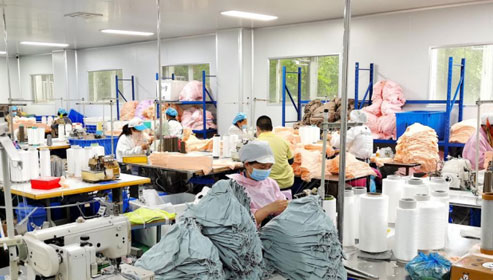
JQ Care provides a comprehensive range of Filtering Face Piece (FFP) masks engineered to meet the stringent EN 149:2001+A1:2009 European standards. Designed for industrial, construction, and healthcare sectors, these respirators offer reliable protection against solid and liquid aerosols, dust, and smoke. From FFP1 (80% filtration) for non-toxic dust to FFP3 (99% filtration) for high-risk hazardous particles, our masks balance respiratory safety with long-shift comfort, featuring optional exhalation valves and adjustable nose clips.

Throughout the pandemic, more and more people build awareness of mask usage and classification, you might be confused by the choices of mask. Precisely, you need to balance the cost, comfort, and availability of various types of masks against their effectiveness for what you’ll need them to do.
Unfiltered surgical face masks provide appropriate daily protection with its non-woven meltblown filter media later. The ffp 1 2 3 classification system helps users identify the filtration efficiency required for specific environments. FFP1 mask, FFP2 (KN95), and FFP3 (KN99) respirators provide more protection, FFP2 and KN95 respirators, in particular, are recommended as providing high-quality protection against the spread of respiratory illness. Half-mask respirators design provides equally good protection and may be even more comfortable and cost-effective than standard respirators, especially if you’ll be wearing them for long hours.
In conclusion, you should choose the mask or respirator to fit your use situation. If you’re working on a construction project or in an enclosed space with a lot of people and the risk of COVID-19 spread, keeping yourself safe is more important than comfort, a respirator is recommmended. If you need to wear protection for many hours but there is little direct risk of COVID-19 exposure, wearing a disposable face mask or surgical mask may make more sense.
| Protection Class | Filtration Efficiency (PFE) | Max Total Inward Leakage (TIL) | Typical Industrial Applications |
| FFP1 Respirator | ≥ 80% | < 22% | Construction, Food Industry, Sweeping, Textile dust |
| FFP2 Respirator | ≥ 94% (KN95 Equivalent) | < 8% | Mining, Metalworking, Sanding, Smog, General Medical |
| FFP3 Respirator | ≥ 99% (Highest Protection) | < 2% | Pharmaceutical, Asbestos, Toxic Chemicals, Infectious Aerosols |
All JQ Care FFP respirators are tested and certified according to European Standard EN 149:2001+A1:2009.
The primary difference lies in the filtration efficiency and total inward leakage (TIL) as defined by the EN 149:2001+A1:2009 standard.
FFP1 Masks: Filter at least 80% of airborne particles; suitable for non-toxic dust and aerosols.
FFP2 Masks: Filter at least 94% (comparable to N95/KN95); ideal for moderate levels of fine dust and smog.
FFP3 Masks: Provide the highest protection, filtering at least 99% of all particles, including highly toxic dust and biological aerosols.
You should opt for an FFP3 respirator mask when working in high-risk environments involving asbestos handling, lead dust, silica, or pharmaceutical chemicals. In medical settings, FFP3 is critical for protection against highly infectious aerosols and viruses where maximum filtration is the top priority for workplace safety.
Yes. We offer valved FFP1, FFP2, and FFP3 masks specifically designed to reduce breathing resistance. The exhalation valve allows moisture and heat to escape the mask more quickly, which is essential for workers during strenuous physical tasks or long work hours in warm industrial environments.
All JQ Care FFP respirators are clearly marked with the CE mark, the EN 149:2001+A1:2009 standard, and the protection class (FFP1, FFP2, or FFP3). As a professional PPE manufacturer, we provide complete technical data sheets and certification for industrial and government procurement.
Phone:
E-mail:
Hongkong:


 English
 日本語
日本語 한국어
한국어 français
 Deutsch
 Español
 русский
 português
 العربية