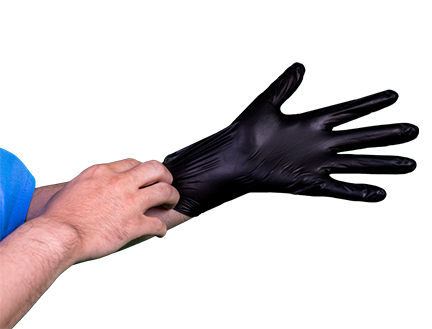

Selecting the optimal protective glove requires balancing tactile sensitivity, chemical resistance, cost, and allergy compliance. Latex offers unmatched elasticity but poses severe Type I allergy risks. Nitrile provides superior puncture resistance and excellent oil/chemical barriers without latex proteins. Neoprene delivers specialized elastic comfort paired with broad-spectrum chemical and acid resistance.
For high-volume clinical and industrial applications, transitioning to advanced, high-durability vinyl-nitrile blend gloves or specialized synthetic alternatives represents a cost-effective benchmark for universal safety compliance.
Hand protection in 2026 demands absolute compliance with modern workplace safety standards, including ASTM D6319 (for nitrile medical gloves) and the EN 455 series (for European medical gloves). Selecting a glove is no longer just about buying a generic barrier; it requires analyzing specific exposure risks to chemicals, biological pathogens, and physical puncture hazards.
Furthermore, managing workplace dermatitis and hypersensitivity has driven a industry-wide shift toward high-performance synthetics. Sourcing from a certified manufacturer ensures your facility meets rigorous Acceptable Quality Level (AQL) criteria for pinhole metrics.
Natural Rubber Latex (NRL) has been the traditional backbone of medical and laboratory environments for decades.
Pros: Unmatched tactile sensitivity, superior elasticity, and a highly ergonomic fit that minimizes hand fatigue during prolonged wear.
Cons: The presence of natural proteins can trigger severe Type I systemic allergic reactions (anaphylaxis) in both healthcare workers and patients.
Regulatory Trend: Many global health systems have implemented strict latex-free mandates, restricting natural rubber to highly specialized surgical applications where synthetic tactile feedback is insufficient.
Nitrile is formulated from acrylonitrile-butadiene, a completely synthetic copolymer that eliminates the risk of latex allergies.
Pros: Excellent resistance to punctures, tears, and abrasions (up to three to five times more puncture-resistant than latex). Nitrile provides an exceptional barrier against petroleum-based oils, fuels, solvents, and specific organic acids.
Cons: Slightly less elastic than natural rubber, which can cause minor hand restriction during long shifts if the sizing is incorrect.
Modern Evolution: Advanced manufacturing has yielded cost-efficient hybrid options, combining the affordability of vinyl with the strength of nitrile to form high-performance vinyl-nitrile blend gloves tailored for general clinical examinations and food processing.
When comparing neoprene vs nitrile gloves, neoprene, chemically known as polychloroprene, is a synthetic rubber that bridges the functional gap between latex and nitrile.
Pros: It replicates the comfortable elasticity and soft feel of natural latex while remaining entirely latex-free. Neoprene excels in broad-spectrum chemical environments, resisting degradation from acids, bases, alcohols, and deep-cleaning disinfectants.
Cons: Generally carries a higher price point per unit than standard nitrile or vinyl formulations, positioning it as a specialized solution rather than a bulk utility item.
Glove Material | Tensile Strength & Puncture Resistance | Elasticity & Hand Comfort | Chemical Barrier Strengths | Allergy Profile |
Natural Rubber Latex | Moderate | Excellent | Water-based solutions, alcohols, mild acids | High Risk (Type I & Type IV) |
Nitrile Rubber | Excellent | Moderate to High | Petroleum, oils, fuels, solvents, grease | Safe (Latex-Free; low Type IV risk) |
Neoprene (Polychloroprene) | High | Excellent | Broad acids, bases, oxidizers, harsh chemicals | Safe (Latex-Free; minimal accelerators) |
Securing hands is only one facet of total institutional biological and mechanical barrier management. To establish a completely compliant, sterile environment across your facilities, your supply chain must synchronize hand protection with total body barriers:
For Sterile Fields & Liquid Barriers: Learn how to match procedure risks with barrier performance in our guide to disposable surgical drapes and materials.
For Advanced Airborne Filtration: Protect your staff from respiratory hazards by choosing the correct gear via our complete EN 149 guide on FFP1, FFP2, and FFP3 respirators.
AQL stands for Acceptable Quality Level. It defines the maximum number of defective gloves allowed within a production batch during random sampling testing (typically water-leak testing for pinholes). For medical exam gloves, the regulatory standard is an AQL of 1.5 or lower, meaning fewer than 1.5% of the batch may contain defects. Industrial-grade gloves often carry a higher AQL of 2.5 or 4.0.
Yes. While nitrile and neoprene completely eliminate Type I latex allergies, users can still experience contact dermatitis or Type IV chemical allergies. This is typically not caused by the rubber itself, but by residual chemical accelerators (such as thiurams, carbamates, or thiazoles) used during the manufacturing vulcanization process. "Accelerator-free" synthetics are available for highly sensitive individuals.
Vinyl-nitrile blend gloves combine polyvinyl chloride (PVC) and acrylonitrile-butadiene. This hybrid creation offers greater flexibility, tactile warmth, and tear resistance than standard pure vinyl gloves, while offering a significantly more economical price point than 100% pure nitrile. They are ideal for medium-duty tasks requiring frequent glove changes.
Not all gloves are safe for chemotherapy. Handling cytotoxic drugs requires specialized testing under ASTM D6978 (Standard Practice for Assessment of Resistance of Medical Gloves to Permeation by Chemotherapy Drugs). Pure nitrile or neoprene gloves certified under this standard must explicitly state "Chemotherapy Tested" on the packaging, alongside a breakdown of breakthrough times for specific oncology chemicals.

 English
 日本語
日本語 한국어
한국어 français
 Deutsch
 Español
 русский
 português
 العربية