 English
 日本語
日本語 한국어
한국어 français
 Deutsch
 Español
 русский
 português
 العربية
A disposable scrub suit is normally made from lightweight non-woven material and is discarded after its designated use, while reusable scrubs are made from woven fabrics that must be collected, laundered, inspected and returned to service. Disposable scrubs simplify garment turnover and may be practical for temporary, high-throughput or controlled-use settings. Reusable scrubs can offer better long-term comfort and lower waste generation when a healthcare facility has a reliable textile-management system.
Neither option is automatically best for every hospital department. The right choice depends on exposure risk, garment purpose, laundry capacity, staff comfort, inventory control, waste management and total cost per use.
What Is a Scrub Suit?
A scrub suit is a healthcare work uniform typically consisting of a short-sleeved or long-sleeved top and matching trousers. Scrubs help facilities create a consistent dress system, separate clinical workwear from street clothing and organize staff by department, role or access area.
Scrubs are worn by doctors, nurses, technicians, dental personnel, laboratory employees, cleaning teams and other healthcare workers. They may also be used in pharmaceutical production, cleanrooms, veterinary care, emergency response and temporary medical facilities.
However, a basic scrub suit is not automatically personal protective equipment. The Occupational Safety and Health Administration explains that uniforms or scrubs worn in a manner similar to street clothes are generally not intended to function as PPE. Where employees may be exposed to blood or other potentially infectious materials, the employer must provide appropriate protective clothing based on the actual hazard. See the OSHA interpretation concerning uniforms, scrubs and bloodborne-pathogen protection.
Disposable and Reusable Scrubs at a Glance
Disposable Scrub Suits
Single-use garments generally manufactured from non-woven polypropylene or SMS fabric.
No return-laundry cycle
Predictable condition at first use
Useful for visitors and temporary staffing
Easy to issue by size or department
Creates additional purchasing and waste volume
Reusable Scrubs
Multi-use garments commonly manufactured from cotton, polyester or blended woven fabrics.
Designed for repeated wear and laundering
Often softer during long shifts
Requires collection and textile processing
Needs repair, loss and replacement control
Can reduce single-use waste when well managed
| Selection Factor | Disposable Scrub Suit | Reusable Scrubs |
|---|---|---|
| Typical material | PP spunbond or SMS non-woven fabric | Cotton, polyester or woven blends |
| Intended service life | One designated use | Multiple wear and laundry cycles |
| Initial garment cost | Usually lower per set | Usually higher per set |
| Ongoing processing | No laundering, but replenishment and disposal are required | Laundry, inspection, transport, storage and replacement are required |
| Fit and comfort | Lightweight; performance varies with GSM, design and material softness | Often softer and more flexible for repeated daily wear |
| Inventory model | Carton-based consumable inventory | Circulating garment inventory by wearer, size or department |
| Waste impact | Higher volume of single-use waste | Lower disposal frequency but uses water, energy and detergents |
| Suitable starting point | Temporary sites, visitors, contingency supply and controlled single-use programs | Routine daily use in facilities with reliable laundry infrastructure |
Material Differences: SMS, PP and Woven Fabrics
SMS Non-Woven Scrub Suits
SMS stands for spunbond-meltblown-spunbond. The outer spunbond layers provide structure and strength, while the central meltblown layer creates a denser fibrous structure. SMS is commonly selected for disposable medical apparel because it can combine low weight, breathability and resistance to limited liquid or particle contact.
JQ Care’s disposable non-woven scrub suits are available in SMS material, with selectable sizes, colors, fabric weights and pocket configurations for hospital and distributor purchasing.
Spunbond Polypropylene Scrubs
Single-layer spunbond polypropylene is lightweight and economical. It may be suitable for low-risk, short-duration use, visitor garments, general hygiene programs and environments where substantial liquid contact is not expected.
Buyers should not judge performance by material name alone. A lightweight PP garment and a multi-layer SMS garment can behave differently even when both are marketed as disposable scrubs.
Reusable Woven Scrubs
Reusable scrubs are commonly made from cotton, polyester or a cotton-polyester blend. Cotton can improve softness and moisture absorption, while polyester can support dimensional stability, quicker drying and resistance to repeated laundering.
The useful life of reusable scrubs depends on fabric quality, seam construction, wash chemistry, drying temperature, stain exposure and the facility’s withdrawal criteria. Garments should be inspected for open seams, holes, thinning fabric, permanent contamination and damaged closures before being returned to use.
Hygiene and Infection-Control Considerations
Disposable scrub suits eliminate the need to reprocess the same garment for another use, but this does not make the full hygiene process automatic. Facilities must still manage clean storage, issue procedures, changing areas, removal practices and disposal routes.
Reusable scrubs can also be managed safely when a healthcare facility has an appropriate textile-processing system. The CDC advises healthcare facilities to control the collection, bagging, transport, sorting and laundering of contaminated textiles in ways that minimize exposure and prevent contamination of clean items. Buyers evaluating reusable garments should review the CDC guidance on laundry and bedding in healthcare facilities.
The decision should therefore be based on the facility’s complete garment-management process rather than on the simple assumption that disposable always means hygienic or reusable always means contaminated.
Are Disposable Scrubs More Protective?
A disposable scrub suit can provide a basic clothing layer and limited protection from dust or light particulate contact, depending on its construction. It should not automatically be described as a fluid-resistant isolation garment or a surgical barrier.
Protection depends on more than fabric weight. Buyers should assess:
Fabric composition and layer structure
Liquid resistance and test method
Seam design and seam integrity
Sleeve and trouser coverage
Neckline and waist closure
Garment fit during movement
Intended-use statement
Applicable regulatory documentation
The CDC’s National Institute for Occupational Safety and Health notes that protective-clothing selection in healthcare should reflect the source of exposure, transmission route, pressure, type of contact and task duration. Its protective clothing guidance for healthcare workers provides a useful framework.
For surgical procedures or patient-isolation situations, a suitable gown should be selected according to the expected barrier requirement. The FDA overview of medical gowns explains the different intended uses of surgical and non-surgical gowns.
Disposable Scrub Suit Cost vs Reusable Scrub Cost
Comparing only the unit price gives an incomplete result. Hospitals should compare total garment cost over the required service period.
Disposable Scrub Suit Cost Includes
Price per top-and-trouser set
Freight, import costs and warehousing
Daily consumption rate
Emergency reserve stock
Internal distribution labor
Waste collection and treatment
Unused stock loss or expiry management
Reusable Scrub Cost Includes
Initial garment purchase
Collection and transport
Water, energy, detergent and labor
Commercial or hospital laundry charges
Inspection, folding and redistribution
Repair and replacement
Garment loss and size shortages
Storage space and circulating inventory
Disposable suits may be cost-effective when laundry is unavailable, demand is temporary or garment turnover must be tightly controlled. Reusable scrubs may deliver a lower cost per wear when a facility has high, predictable usage and an efficient laundry system.
Which Scrub Suit Is Best for Each Healthcare Setting?
| Healthcare Setting | Practical Selection Consideration |
|---|---|
| Routine clinics | Reusable scrubs are often practical for regular staffing; disposable sets can support visitors, contractors and backup inventory. |
| Operating departments | Facility-controlled scrubs may be used as base attire, but they do not replace procedure-appropriate surgical gowns and sterile apparel. |
| Emergency and surge facilities | Disposable scrubs can simplify rapid issue when staffing levels, locations and laundry demand change quickly. |
| Isolation areas | Scrubs should be combined with the required isolation PPE; changing and removal protocols are more important than material name alone. |
| Laboratories | Choose low-linting garments and add laboratory coats, gowns or chemical protective clothing according to the exposure assessment. |
| Pharmaceutical cleanrooms | Use garments compatible with the site’s contamination-control and gowning program; low-shedding performance may be a key requirement. |
| Home healthcare | Reusable uniforms may suit routine care, while disposable sets can support selected contamination-control or short-term assignments. |
Environmental and Waste Considerations
Disposable scrub suits reduce laundering requirements but increase the volume of single-use waste. The final disposal route depends on whether the garment is classified as general waste, contaminated healthcare waste or another regulated waste category under local rules.
Reusable scrubs reduce the frequency of garment disposal but require water, electricity, chemicals, transport and textile-processing infrastructure. Environmental comparison therefore depends on local energy sources, laundry efficiency, transport distance, garment life and waste-treatment method.
The World Health Organization recommends safe and environmentally sound management of healthcare waste and favors appropriate non-incineration treatment methods where feasible. Facilities developing a disposable-apparel program should consult the WHO healthcare waste overview and local regulations.
Hospital Scrub Suit Purchasing Checklist
Before requesting samples or bulk pricing, hospital buyers and medical distributors should define the following specifications:
Frequently Asked Questions
What is the difference between disposable scrubs and reusable scrubs?
Disposable scrubs are normally made from non-woven material and are intended for one designated use. Reusable scrubs are made from washable woven fabric and circulate through repeated wearing, collection, laundering and inspection cycles.
Are disposable scrub suits PPE?
Not automatically. Some disposable scrub suits provide basic clothing coverage, but their protective function depends on their intended use, material, construction and testing. Ordinary scrubs should not replace isolation gowns, surgical gowns or other hazard-specific PPE.
What material is best for disposable scrub suits?
SMS is commonly selected when buyers need a balance of strength, breathability and limited liquid resistance. Lightweight spunbond polypropylene may be sufficient for short, low-risk applications where an advanced barrier is not required.
Can disposable scrubs be worn in an operating room?
They may be used as facility-approved base attire when they meet the hospital’s policy, but they do not replace the sterile surgical gown and other protective apparel required for the procedure.
Are reusable scrubs hygienic?
Reusable scrubs can be managed hygienically when they are properly collected, transported, laundered, dried, stored and inspected. The facility should maintain written procedures for contaminated textiles and clean garment distribution.
What affects disposable scrub suit price?
Price is influenced by material, GSM, size range, garment construction, pockets, color, packaging, order quantity, customization, testing requirements and delivery terms.
Choosing the Right Scrub Suit Supply Model
Disposable scrub suits are particularly useful when healthcare organizations need rapid deployment, predictable first-use condition, simple garment issue and freedom from laundry processing. Reusable scrubs remain practical for routine daily wear when facilities have dependable laundering, inventory circulation and garment inspection systems.
Many hospitals benefit from a mixed model: reusable scrubs for routine staff use and disposable scrub suits for visitors, temporary teams, emergency reserves, selected departments or periods when laundry capacity is constrained.
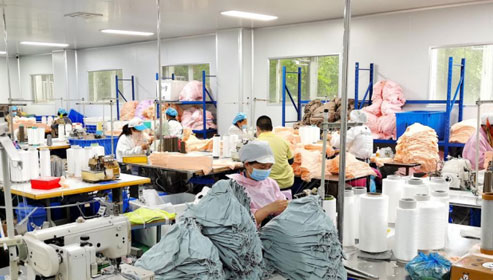
JQ Care supplies both disposable and reusable scrub suit options, together with a wider range of disposable body-protection products. Material, GSM, color, size, pockets, waist style and packaging can be selected according to the purchasing program.
Need Disposable Scrub Suit Samples or Pricing?
Provide your intended application, preferred material, GSM, size range, color, packaging and expected order quantity for a more accurate product recommendation.
Request Scrub Suit Information