 English
 日本語
日本語 한국어
한국어 français
 Deutsch
 Español
 русский
 português
 العربية
Non-woven wipes are disposable or limited-use wiping materials manufactured by bonding fibers into a web without traditional weaving or knitting. Depending on the fiber blend and production process, they can be designed for liquid absorption, surface cleaning, personal care, low-lint wiping or the application of cleaning and disinfecting solutions.
Spunlace wipes are often selected when softness, drape and liquid absorption are priorities, while polypropylene wipes may suit economical cleaning, oil handling and selected industrial applications. However, material name alone does not determine performance. Buyers should also compare GSM, fiber composition, absorbency, wet strength, lint level, surface texture, chemical compatibility, size and packaging.
Quick answer: Choose spunlace wipes for applications requiring softness, good liquid absorption and comfortable contact with surfaces or intact skin. Choose polypropylene wipes for economical general cleaning, oil-related work or tasks where lower liquid absorption may be acceptable. Always evaluate the finished wipe rather than selecting by material or GSM alone.
What Are Non-Woven Wipes?
Non-woven wipes are produced by forming natural or synthetic fibers into a sheet and bonding them mechanically, thermally or chemically. Common raw materials include polyester, viscose, polypropylene, cotton and wood pulp. The finished material can be supplied as dry sheets, folded wipes, rolls or pre-saturated products.
Unlike woven cloth, a non-woven wipe does not depend on interlaced yarns for its structure. Its strength, texture and liquid behavior are influenced by fiber type, fiber ratio, web formation, bonding method and surface treatment.
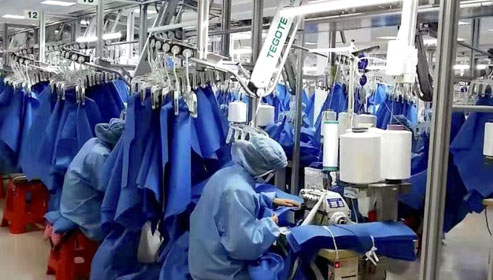
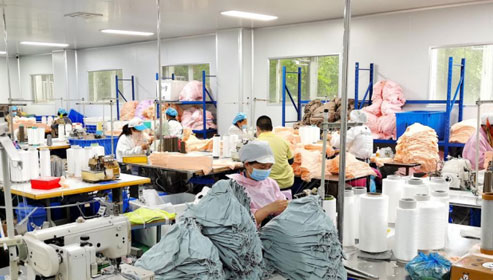
JQ Care supplies customizable non-woven wipes in spunlace material, with selectable fabric weights from 30 to 120 GSM, dimensions and colors for medical, hygiene, beauty and general cleaning applications.
Absorbency
How quickly the wipe takes in liquid and how much liquid it can retain before dripping or becoming saturated.
Wet Strength
Whether the wipe maintains its structure during scrubbing, folding, squeezing or use with cleaning solutions.
Lint Control
The amount of loose fiber or particulate matter released while wiping sensitive equipment or finished surfaces.
Surface Feel
The balance between softness, friction and texture required for skin contact, polishing or removal of stubborn soil.
Spunlace vs Polypropylene Non-Woven Wipes
Spunlace Wipes
Hydroentangled fibers for softness and flexible wiping
Spunlace, also called hydroentangled non-woven fabric, is produced by using high-pressure water jets to entangle fibers. Common blends include viscose and polyester.
Viscose can improve liquid absorption and softness, while polyester contributes strength and dimensional stability. The ratio can be adjusted according to whether the wipe is intended for personal care, medical cleaning, beauty use or general surface wiping.
PP Wipes
Polypropylene-based material for economical wiping
Polypropylene is a lightweight synthetic polymer widely used in disposable non-woven products. Untreated PP is naturally less water-absorbent than viscose-rich spunlace, but its surface can be modified for specific liquid-handling requirements.
PP wipes may be selected for light cleaning, oil handling, equipment maintenance, food-service support and other applications where cost efficiency and material consistency are important.
| Comparison Factor | Spunlace Wipes | PP Non-Woven Wipes |
|---|---|---|
| Typical fiber content | Viscose, polyester or a blend of both | Polypropylene |
| Surface feel | Generally softer and more cloth-like | Can feel lighter or firmer depending on construction |
| Water absorption | Usually stronger when the blend contains a higher proportion of viscose | Normally lower unless the material is treated or engineered for absorbency |
| Wet strength | Good when polyester content and web construction are appropriate | Suitable for light and selected industrial wiping tasks |
| Common applications | Medical care, beauty, personal cleansing, hospitality and general cleaning | Food handling support, industrial cleaning, oil wiping and economical disposable use |
| Buyer priority | Softness, absorbency and user comfort | Cost, consistency and application-specific liquid handling |
How GSM Affects Wipe Performance
GSM means grams per square meter and describes the mass of fabric within a defined area. ISO 9073-1 specifies a method for determining the mass per unit area of non-woven materials.
A higher GSM wipe normally contains more material per square meter and may feel thicker or stronger. However, higher GSM does not automatically guarantee greater absorbency or lower lint. Fiber type, bonding method, surface structure and chemical treatment can be equally important.
Practical GSM Starting Ranges
The following ranges are general purchasing references rather than universal performance standards.
ISO 9073-6 covers methods used to evaluate liquid absorbency time, absorptive capacity and liquid wicking behavior. For bulk purchasing, these measured results are more useful than GSM alone.
Dry Wipes vs Pre-Saturated Wipes
Dry Non-Woven Wipes
Dry wipes are supplied without a cleaning, cosmetic or disinfecting formulation. The user applies water, detergent, solvent or another compatible solution according to the work process.
Dry wipes provide flexibility because one substrate can potentially be paired with different approved liquids. They can also offer a longer practical storage period because there is no pre-added liquid that may evaporate, separate or require preservation.
Pre-Saturated Wipes
Pre-saturated wipes are packaged with a liquid formulation. They can improve dosing consistency and convenience, but the complete product must be evaluated as a system. The substrate must retain enough liquid, release it evenly and remain compatible with the formulation during storage.
A pre-saturated wipe is not automatically a disinfectant wipe. In the United States, wipes used to disinfect or sanitize inanimate surfaces are regulated by the Environmental Protection Agency. The surface must remain visibly wet for the contact time stated on the registered product label.
The FDA explains that wipes used for cleansing or moisturizing intact skin may be regulated as cosmetics, while wipes intended to kill germs on the skin may be regulated as drugs. Wipes intended to disinfect inanimate surfaces fall under EPA regulation.
Best Applications for Non-Woven Disposable Wipes
Medical Facilities
Patient-area cleaning, equipment preparation, general hygiene and disposable cleaning processes, subject to facility protocols.
Beauty and Wellness
Facial cleansing, cosmetic removal, salon treatment preparation and spa surface wiping where softness is important.
Food Service
General cleaning and food-preparation support when the wipe and applied solution are suitable for the intended surface.
Laboratories
Bench cleaning, equipment wiping and controlled liquid application with attention to lint, extractables and chemical compatibility.
Industrial Cleaning
Removal of oil, grease, dust, processing residue and general soil from tools, components and working surfaces.
Hospitality
Guestroom cleaning, catering support, housekeeping and high-turnover disposable hygiene programs.
Healthcare facilities should distinguish between cleaning and disinfection. Cleaning removes soil and organic material through detergent, water and mechanical action. Disinfection requires an appropriate disinfectant used according to its label, including the required surface contact time.
The CDC notes that ready-to-use wipes saturated with an appropriate disinfectant or detergent-disinfectant can be used for environmental cleaning when they are stored correctly and remain sufficiently wet. Wipes that have dried out should not be relied upon to deliver the intended liquid dose.
How to Select Low-Lint and Cleanroom Wipes
“Lint-free” is often used as a marketing term, but no wipe should be assumed to release zero fibers or particles under every condition. For cleanrooms, electronics, optics, laboratories or precision manufacturing, buyers should request measurable performance information.
Important clean-wiping factors include:
Particle and fiber release during dry and wet wiping
Non-volatile residue or extractable content
Ionic contamination
Edge construction and cutting method
Abrasion resistance
Compatibility with alcohol, solvents or disinfectants
Packaging environment and cleanliness level
Sterile or non-sterile supply requirements
A soft wipe is not necessarily a cleanroom wipe, and a visually smooth wipe may still release particles or chemical residues. Application testing should be completed on the actual surface and with the actual liquid used in production.
Non-Woven Wipes Purchasing Checklist
Frequently Asked Questions
What are non-woven wipes made of?
Non-woven wipes can be manufactured from polyester, viscose, polypropylene, cotton, wood pulp or blended fibers. The material should be selected according to absorbency, strength, softness, lint and chemical-compatibility requirements.
Are spunlace wipes better than PP wipes?
Spunlace is generally better when softness, drape and water absorption are priorities. PP may be more suitable for economical cleaning, oil handling or selected industrial tasks. Neither material is best for every application.
What GSM is best for non-woven wipes?
Light wiping may use approximately 30–40 GSM, while general-purpose products often start around 45–60 GSM. Heavier 60–120 GSM formats may suit more demanding work. The correct GSM must be confirmed through finished-product testing.
Are non-woven wipes lint-free?
Some non-woven wipes are engineered for low-lint performance, but “lint-free” should not be treated as an absolute guarantee. Cleanroom and precision buyers should request particle-release and residue data.
Can dry non-woven wipes be used with disinfectant?
They may be used with a compatible disinfectant when the disinfectant manufacturer’s directions allow that method. The wipe must release sufficient liquid to keep the surface visibly wet for the required contact time.
Are all medical non-woven wipes sterile?
No. A wipe used in a healthcare environment is not automatically sterile. Sterility, intended use and regulatory status must be confirmed from the product packaging and supporting documentation.
Can the size and packaging be customized?
Yes. Depending on manufacturing capability and order volume, buyers can specify wipe dimensions, GSM, fiber ratio, color, folding style, roll format and private-label packaging.
Choosing a Non-Woven Wipes Supplier
Successful wipe sourcing requires more than asking for the lowest price per sheet. A lighter or less absorbent wipe may increase the number of wipes consumed per cleaning task, while a very heavy wipe may add unnecessary material and shipping cost.
Professional buyers should compare the complete wiping system: substrate, liquid compatibility, performance per task, packaging, shelf life, storage, documentation and disposal requirements.
JQ Care supplies customizable spunlace non-woven wipes and a broader range of disposable medical and hygiene products. Related products include non-woven bed sheets and disposable non-woven pillowcases for healthcare, beauty and high-turnover hygiene environments.
Need Custom Non-Woven Wipes?
Send JQ Care your intended application, preferred material, GSM, dimensions, packaging format and annual purchasing volume for sample evaluation and wholesale pricing.
Request Samples and Pricing