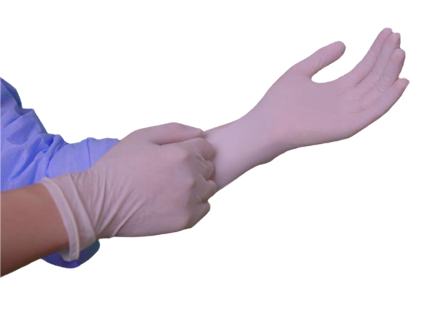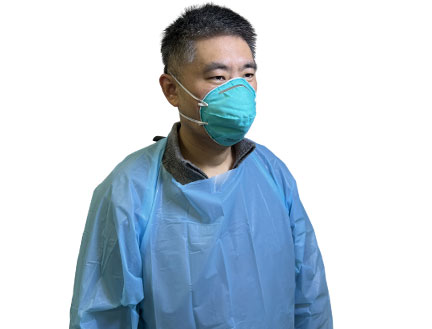

Isolation gown levels describe the liquid barrier performance of protective apparel used in healthcare settings. Under the ANSI/AAMI PB70 classification system, protective gowns are grouped into four levels: Level 1 for minimal risk, Level 2 for low risk, Level 3 for moderate risk, and Level 4 for high risk. Choosing the correct gown requires more than looking at fabric type or GSM; buyers should consider the expected exposure, intended use, garment construction, test results and applicable regulatory requirements.
This guide explains the isolation gown level chart, how ANSI/AAMI PB70 classification works, why material weight alone does not determine protection level, and how PP, PP+PE and PE gown constructions can be compared when sourcing isolation gowns for medical and institutional use.
Key Takeaways
ANSI/AAMI PB70 defines four liquid barrier performance levels for protective apparel used in healthcare.
Level 1 represents minimal risk, while Level 4 represents the highest barrier level in the classification.
Fabric type and GSM alone do not establish an AAMI protection level.
PP, PP+PE and PE offer different balances of breathability, liquid resistance and comfort.
Procurement teams should confirm the intended use, product labeling and supporting test documentation before ordering.
ANSI/AAMI PB70 establishes a classification system for protective apparel and drapes used in healthcare facilities based on liquid barrier performance. The system is intended to help healthcare users identify an appropriate level of protection for a particular task or exposure risk.
The U.S. FDA recognizes ANSI/AAMI PB70 and describes the four gown levels as minimal, low, moderate and high risk. The examples below are useful selection references, but actual gown choice should follow the facility's risk assessment and the labeling of the specific product.
| AAMI Level | Risk Level | Barrier Performance | Typical FDA Examples |
|---|---|---|---|
| Level 1 | Minimal Risk | Basic liquid barrier performance | Basic care, standard isolation, visitor cover gowns and standard medical units |
| Level 2 | Low Risk | Greater liquid resistance than Level 1 | Blood draw, suturing, ICU use and pathology laboratory work |
| Level 3 | Moderate Risk | Moderate liquid barrier performance | Arterial blood draw, IV insertion, emergency rooms and trauma cases |
| Level 4 | High Risk | Highest barrier level in the PB70 classification | Long fluid-intensive procedures, surgery and situations where pathogen resistance is required |
Important: AAMI level is a performance classification, not a simple description of fabric thickness. Always confirm the protection level claimed on the finished gown and the supporting test documentation.
ANSI/AAMI PB70 classifies protective apparel using standardized barrier-performance testing rather than relying only on the material name. Lower levels primarily evaluate resistance to water penetration, while the requirements become progressively more demanding as the claimed barrier level increases.
| Level | Main Barrier Evaluation | What Buyers Should Understand |
|---|---|---|
| Level 1 | Water impact penetration resistance | Intended for minimal barrier requirements |
| Level 2 | Water impact plus hydrostatic-pressure resistance | Higher liquid barrier requirement than Level 1 |
| Level 3 | Water impact plus a higher hydrostatic-pressure requirement | Designed for moderate liquid exposure risk |
| Level 4 | Resistance to penetration by blood-borne pathogens using recognized test methods | Highest barrier classification and requires more demanding performance evidence |
For regulatory and technical details, buyers can review the FDA guidance on medical gowns and the current ANSI/AAMI PB70 standard when evaluating supplier documentation.
No. GSM does not determine an isolation gown's AAMI level. GSM measures fabric mass per unit area, but barrier performance also depends on material structure, coatings or laminates, seams, garment construction and the performance of the finished product during testing.
For example, a 20 GSM or 25 GSM polypropylene gown should not automatically be described as AAMI Level 1 or Level 2 simply because of its weight. Buyers sourcing a PP isolation gown should request the relevant barrier test information whenever a specific protection level is required.
Material choice influences comfort, breathability and resistance to liquids, but the material itself does not establish an AAMI level. The final protection claim should be supported by testing of the specific gown construction.
| Feature | PP | PP+PE | PE |
|---|---|---|---|
| Construction | Non-woven polypropylene | PP with PE layer or lamination | Polyethylene |
| Breathability | Generally higher | Moderate | Generally lower |
| Liquid Resistance | Depends on construction and testing | Typically enhanced by the PE layer | Useful where liquid resistance is a key purchasing requirement |
| Buying Priority | Lightweight comfort and economy | Balance of comfort and fluid resistance | Liquid-resistant disposable coverage |
JQ Care offers PP isolation gowns, PP+PE isolation gowns and PE isolation gowns for different application and purchasing requirements.
The phrase "isolation gown" should not be treated as a universal product category for every risk level. In the United States, the FDA distinguishes non-surgical isolation gowns from surgical isolation gowns. Non-surgical isolation gowns are intended for minimal or low-risk patient isolation situations, while surgical isolation gowns are used when there is a medium to high risk of contamination and larger critical zones of protection are required.
For this reason, procurement teams should confirm both the claimed barrier level and the intended use of the specific gown rather than selecting a product based only on a Level 1–4 number.
A practical isolation gown selection process should begin with exposure risk and required barrier performance, followed by material, construction, comfort and documentation.
| Selection Factor | What to Check |
|---|---|
| Exposure Risk | Determine whether expected exposure is minimal, low, moderate or high and whether liquids or potentially infectious materials may be present. |
| Intended Use | Confirm whether the garment is intended for routine isolation, surgical isolation, surgery or another healthcare activity. |
| Barrier Performance | Verify the claimed AAMI level and supporting test data where a specific barrier classification is required. |
| Material & Construction | Compare PP, PP+PE, PE or other constructions according to breathability, fluid resistance and wearing conditions. |
| Size & Coverage | Confirm suitable body coverage, sleeve design, cuff type and closure for the intended task. |
| Documentation | Request the test reports, labeling and market-specific regulatory documents required for the destination country. |
Comparing Isolation Gowns for a Bulk Order?
Compare JQ Care's PP, PP+PE and PE isolation gown options and confirm material, size, fabric weight, cuff, packaging and available compliance documentation for your target market.
Compare Isolation Gowns Request a QuoteANSI/AAMI PB70 uses four barrier performance levels: Level 1 for minimal risk, Level 2 for low risk, Level 3 for moderate risk and Level 4 for high risk. The appropriate level depends on the intended procedure and expected exposure.
No. GSM describes fabric weight, not certified barrier performance. A gown's AAMI classification must be supported by applicable performance testing of the finished product. Material, seams, coatings and garment construction can all affect barrier performance.
Neither material is universally better. PP is commonly selected when lightweight construction and breathability are important, while PE and PP+PE constructions may be considered when greater resistance to liquids is required. The appropriate product should be selected according to intended use and verified performance.
Where a specific protection level or regulatory claim is required, buyers should request documentation relevant to the selected SKU, such as barrier-performance test reports, product labeling, declarations or other market-specific regulatory information. Requirements vary according to intended use and destination market.
U.S. Food and Drug Administration: Medical Gowns
ANSI/AAMI PB70:2022: Liquid Barrier Performance and Classification of Protective Apparel and Drapes Intended for Use in Health Care Facilities.
 English
 日本語
日本語 한국어
한국어 français
 Deutsch
 Español
 русский
 português
 العربية