
DISPOSABLE SHOE COVER SIZING
A shoe cover that fits a visitor's trainers can be difficult to pull over a maintenance worker's safety boots. The printed shoe size may be the same, while the outer sole, toe shape and upper volume are different.
Choose disposable shoe covers around the footwear they will cover. Measure the outside of representative shoes, confirm how the cover dimensions are defined, and approve sample fit before placing a bulk order.
The useful size check
Check outsole length, outsole width, upper bulk, opening fit and the required coverage height. A US, UK or EU shoe-size conversion alone cannot describe the complete shape that a disposable cover must accommodate.
Use the work shoes or boots that people actually wear at your site, including the largest and bulkiest examples. Record the brand, model and labelled size alongside the measurements. A foot-length measurement does not include the shoe's sole, upper or protective toe construction.
MEASUREMENT 01
Place the shoe on a flat surface. Measure the straight distance from the rearmost heel edge to the foremost toe edge, including any projecting sole or toe bumper. Record the outside length in centimeters or millimeters.
MEASUREMENT 02
Measure across the widest part of the sole, including any side projection. Look at the toe area as well: a broad protective toe shell can need more room than the outsole-width number suggests.
MEASUREMENT 03
Note a high instep, thick tongue, bulky collar or wide toe box. If you record upper girth, mark the tape position in a photo so the supplier knows what was measured. This is supporting information; confirm passage through the elastic opening with a sample.
MEASUREMENT 04
Decide whether you need coverage around a low shoe, above the ankle or farther up a boot. Show the required coverage line in a side photo. A larger low-cut shoe cover does not necessarily provide the height of a boot cover.
Send a top view and a side view with a ruler or tape visible. Include both a smaller, lower-volume shoe and a larger, bulkier shoe so the supplier can assess the range rather than one example.
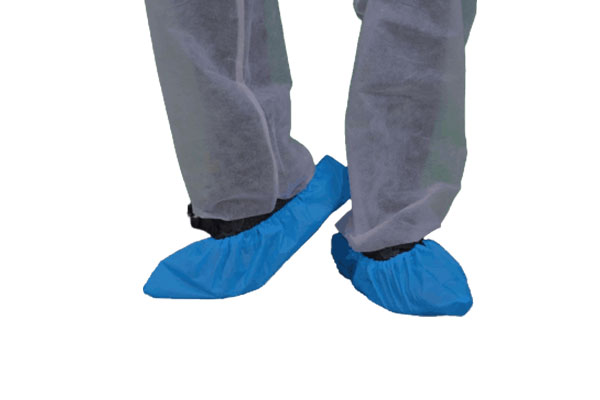
JQ Care plastic shoe covers shown in use. Confirm the selected item's dimensions and fit on your actual footwear.
JQ Care's plastic shoe cover specifications list 41 x 17 cm or customized sizing. Treat that as a starting point for discussion and ask for a drawing that identifies both measurements.
Confirm whether a dimension describes overall length, side height, laid-flat width or another measurement. Also ask whether the item is measured relaxed, stretched or in another defined condition.
Do not read a 41 cm quoted dimension as a promise that the cover fits a shoe with a 41 cm outsole. The finished shape, seams and elastic opening all affect usable fit.
| Supplier specification | What to confirm | Why it matters |
|---|---|---|
| Quoted size, such as 41 x 17 cm | A drawing showing what each number measures, with the item laid flat or in the stated measurement condition. | Overall dimensions do not automatically equal usable space around a shoe. |
| Length and width | Finished dimensions, measurement points and agreed tolerances. | The shape, seams and side depth affect how the cover surrounds the footwear. |
| Elastic opening | How the opening is measured when relaxed and extended, and the recommended way to put the cover on. | The opening must pass over the shoe while retaining the cover after placement. |
| Coverage height | Where the height starts and ends, and the intended coverage line when worn. | A cover that fits around the sole may still be too low for a boot-shaft requirement. |
For an example of how a manufacturer labels finished dimensions, see DuPont's ProShield 30 shoe-cover dimension table, which separates length and height by size. Those figures apply to that model; use the selected supplier's drawing and sample for your order.
Check that the toe and heel sit fully inside the cover and the opening retains it. The smaller shoes in your user group matter too: a cover selected only for the largest shoe can leave excess material around a smaller sole.
Look for tight material across the toe shell and strain at the side seams. Length alone may not resolve the problem. Compare samples with sufficient width and depth for the actual toe shape, then check whether the heel remains secure.
Check entry over the boot's upper as well as seating around the sole. A roomy body with an opening that is difficult to pass over the shoe can still be impractical. If the task requires coverage higher up the shaft, assess a suitable higher-covering design separately.
Use the construction you intend to buy. Check the selected material, seams and elastic together. A fit approval for one sample should not be assumed to cover a different construction without checking it again.
First follow the supplier's placement instructions. For a basic fit check, use a clean, dry, level area approved by the site. Check the cover while standing and during ordinary movements needed for the task, such as a short walk and turn.
The toe, heel and required sides are covered.
The material and seams are not visibly strained by the shoe shape.
The opening holds its position without repeated adjustment.
The heel does not pull free and the cover does not rotate around the shoe.
Loose material does not gather under the sole or trail beyond the shoe.
| Observed problem | Check first | Next sample to assess |
|---|---|---|
| Difficult to pull over the toe or heel | Opening, upper girth and the way the cover is put on. | Try the supplier's placement method and a suitable alternative size or design. |
| Taut material or stressed seams around the toe | Usable width, toe-box shape, depth and length. | Compare a roomier sample with the same required material and construction. |
| Heel pulls free or the cover rotates | Cover length, shape and elastic retention. | Try a closer-fitting sample; do not judge fit from length alone. |
| Loose material gathers under the sole | Excess length, width or depth. | Compare a better-matched size or shape and check the walking fit again. |
| Upper shoe or boot area remains exposed | Required coverage height and opening position. | Consider a higher-covering design if the task requires that area to be covered. |
These observations help diagnose sizing and shape issues. If a cover tears, also review material, seams and the placement method rather than assuming that a larger size will solve every failure.
A close fit does not establish slip resistance. A dry-floor fit check also does not establish performance on water, oil or other contaminants. Review the exact cover's performance information for the intended conditions using the site's established evaluation procedure.
The UK's HSE guidance on slip-resistant footwear recommends considering workplace surfaces and contaminants and involving representative users in evaluations. Apply those practical questions when assessing the footwear-and-cover combination, and record fit approval separately from the required performance approval.
Keep the safety footwear required for the job. For U.S. workplaces, OSHA 29 CFR 1910.136 addresses protective footwear for relevant impact, puncture and electrical hazards. Ordinary disposable shoe covers should not replace the shoes or boots required for those hazards.
It may be practical when the footwear range is similar and samples work well across representative users. Treat a label such as Universal or One Size as a supplier description to verify, rather than a substitute for checking the smallest, largest and bulkiest shoes.
For a mixed site, compare whether two clearly labelled sizes or formats work better: for example, one assessed for ordinary visitor footwear and another assessed for the work boots used by staff. Separate stock is useful only when people can select the right option reliably.
Record placement failures, replacements and frequent adjustments during the evaluation. Keep the approved sample, agreed measurement drawing and packing label with the purchasing specification so later orders can be checked against the same requirements.
Give the supplier enough information to propose a fit sample before discussing a full production order:
Footwear range: brands, models and labelled sizes, including low-volume shoes and bulky safety boots.
Outside measurements: outsole length and width, plus photos showing upper shape and any girth measurement.
Coverage requirement: the parts of the shoe or boot that need to be covered, with the required line marked in a side photo.
Selected construction and use: material preference, intended task, expected wear period, floor conditions and relevant performance requirements.
Order basis: quantity, packing, delivery destination and whether quantities are stated in individual pieces or pairs.
Use the labelled shoe size as supporting information. Measure the outside of the actual footwear because sole projections, safety toes and upper shape affect the space needed inside the cover. Confirm the supplier's sizing with samples.
A quoted cover dimension is not a footwear fit limit. Ask which points are measured and whether the cover is relaxed, stretched or laid flat. The cover must also accommodate width, depth, seams and the entry opening.
Choose a cover that accommodates the boot and stays in position. An oversized cover can leave loose material under the sole. Compare toe room, opening fit and heel retention, and use a higher-covering design when boot-shaft coverage is required.
Use clear labels linked to the footwear range verified in your sample trial. Keep the sizes in separate, identified containers and provide a simple selection instruction. Record the approved specification so replenishment orders use the same size definitions.
JQ Care lists standard and customized sizing for its plastic and non-woven shoe covers. Send the footwear measurements and coverage requirement to discuss a suitable sample and quotation. Confirm the final specification after checking the selected sample on the shoes or boots it will cover.
View Plastic Shoe CoversView Non-Woven Shoe CoversSend Your Sizing RequirementsDuPont: ProShield 30 shoe cover - a manufacturer example of finished-dimension labels. Its dimensions apply to that specific model.
HSE: Slip-resistant footwear - general footwear selection considerations for surfaces, contaminants and user evaluations.
OSHA: 29 CFR 1910.136, Foot protection - U.S. workplace requirements for protective footwear where the specified hazards apply.



 English
 日本語
 한국어
 français
 Deutsch
 Español
 русский
 português
 العربية